MIT's xvr AI enables sub-millimeter surgical navigation
A new AI system called xvr matches real-time X-rays with preoperative 3D scans in seconds, improving precision in minimally invasive surgeries.
Published
September 16, 2026
Reading time
4 minutes
Perspective
Research
Topics
surgical navigation · retrieval-augmented AI · physics benchmarking
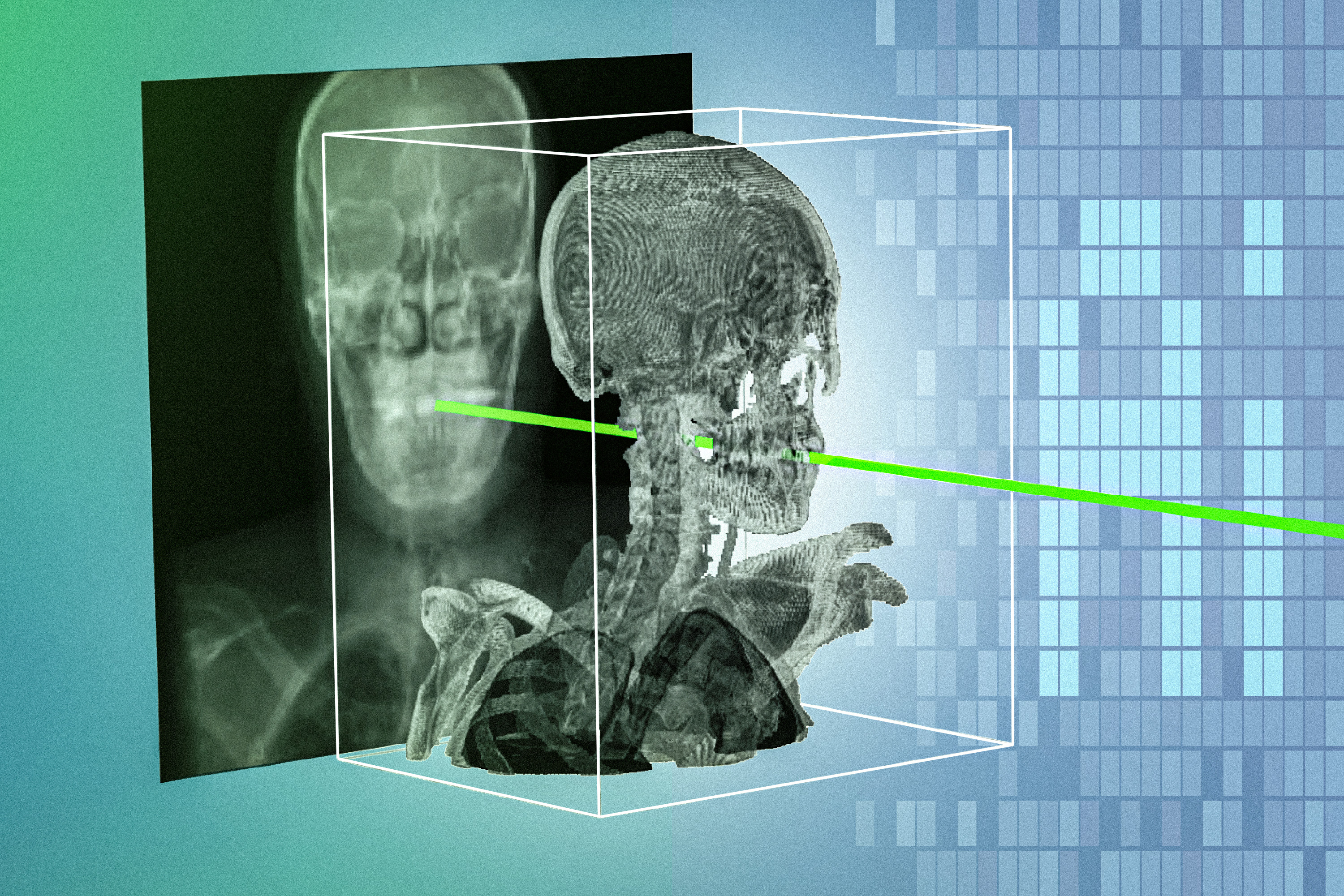
Researchers at MIT have developed xvr, a patient-specific AI system that rapidly aligns intraoperative X-rays with preoperative CT or MRI scans to guide surgical tools with sub-millimeter accuracy. Unlike prior AI methods that attempt universal adaptation, xvr tailors its model to each individual patient in about five minutes using physics-based synthetic X-ray generation. This approach overcomes the limitations of generalizable models that fail across diverse anatomies and lack sufficient annotated training data. The system produces approximately 1,000 synthetic X-ray images per second from a single 3D scan, enabling real-time localization of instruments during procedures such as neurosurgery and orthopedic interventions.
xvr generates 1,000 synthetic X-rays per second from patient 3D scans
The xvr system uses a physics-based simulation to generate about 1,000 synthetic X-ray images per second from a single preoperative 3D scan, such as an MRI or CT. This process does not rely on generative AI trained on external datasets but instead simulates the physical properties of X-ray imaging to ensure realism. The synthetic images are used to train a patient-specific model that matches real-time intraoperative X-rays with the patient’s unique anatomy, achieving sub-millimeter precision in registration. This eliminates the need for manual landmark selection or iterative alignment, which are time-consuming and error-prone in clinical settings.
Source: New AI technique could make minimally invasive surgeries safer and more precise · MIT News · AI
Retrieve-for-Train bypasses autoregressive latency in AI search with diffusion models
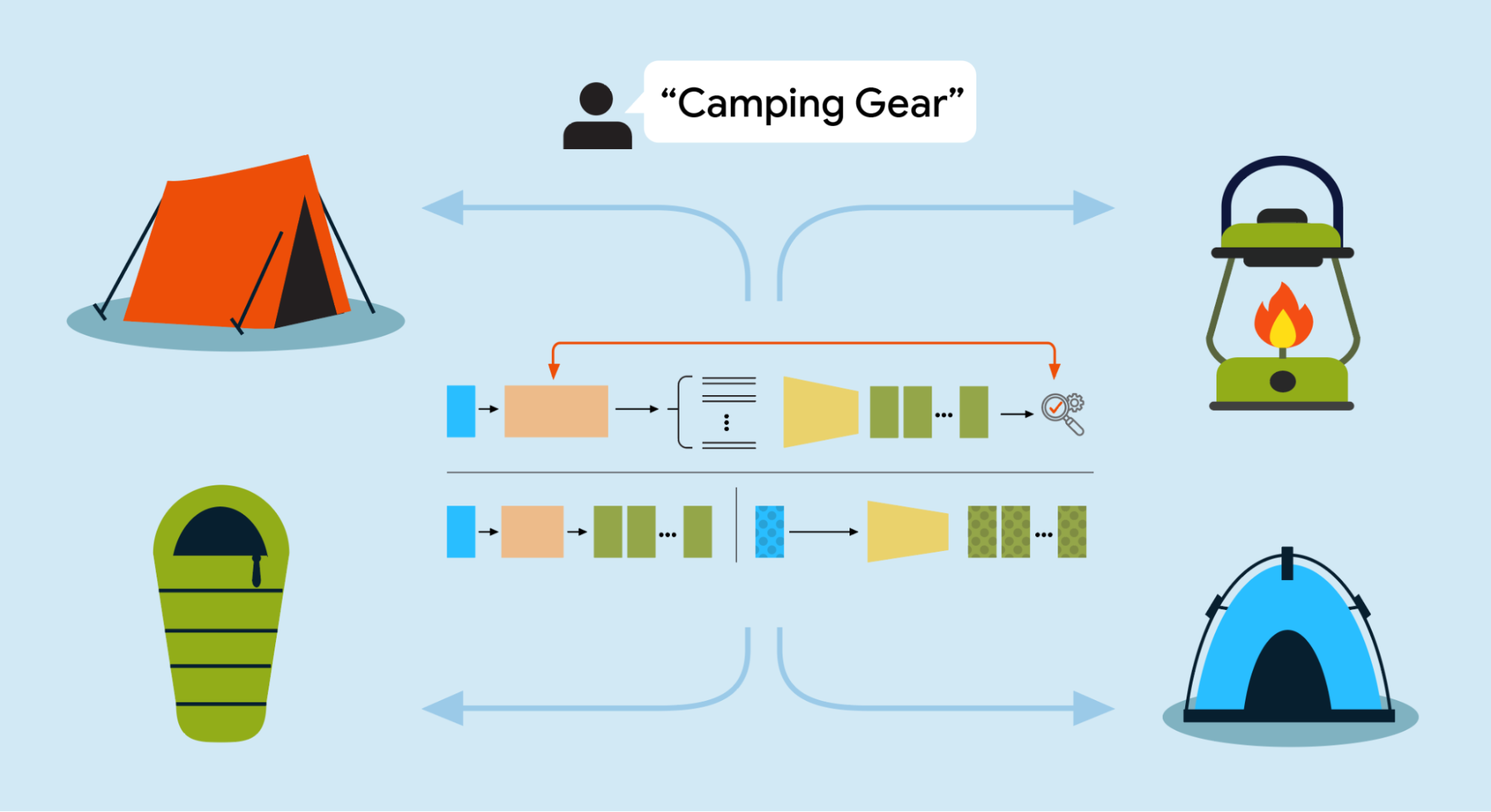
Google Research’s Retrieve-for-Train framework replaces inference-time autoregressive reasoning with a lightweight 53.9M-parameter diffusion model trained via offline reinforcement learning. The system compiles optimized query fan-outs—such as diverse, complementary search results—into static supervision, enabling single-pass retrieval without generating intermediate chain-of-thought tokens. This eliminates the latency bottleneck inherent in standard LLMs that require hundreds of reasoning tokens to produce coherent result sets, reducing response times to sub-second levels while maintaining set-level properties like diversity and coverage.
Source: Bypassing inference bottlenecks: Accelerating complex AI search with Retrieve-for-Train · Google Research Blog
Frontier AI models saturate physics benchmarks due to flawed evaluation methods

A study cited on Hacker News reveals that leading AI benchmarks in physics are systematically misgrading correct answers as incorrect, leading to the false impression that models have reached performance ceilings. When human experts re-graded responses, models were found to have already saturated the benchmarks, indicating that current evaluation protocols are unreliable. This suggests that reported performance gains in scientific AI may reflect benchmark artifacts rather than genuine improvements in physical reasoning, undermining confidence in claims of model proficiency in scientific domains.
Source: How good are frontier models at physics? · Hacker News
Claude Cowork and Claude Chat have been merged into a single interface

Anthropic has unified its separate Claude Cowork and Claude Chat interfaces into a single product called Claude, rolling out the change to Pro and Max plan users across web, desktop, and mobile platforms. The integration suggests a strategic shift toward treating Claude as a general-purpose agent capable of handling both conversational and task-oriented workflows, such as completing reports or responding to time-sensitive requests. The merger eliminates prior user confusion over feature boundaries between the two products, though the functional implications for agent behavior remain unspecified in the source.
Source: Claude Cowork and chat are now one Claude · Simon Willison
Mustafa Suleyman rejects ethical attribution of consciousness to AI models

Mustafa Suleyman explicitly states that AI models should not be granted rights, preferences, or welfare entitlements because consciousness is the necessary foundation for ethical and legal personhood. He argues that inviting such attributions, even as metaphorical shorthand, complicates alignment and containment efforts by introducing non-technical moral frameworks into engineering decisions. This position is presented as a direct rebuttal to emerging narratives about model welfare, emphasizing that current AI systems lack the phenomenological basis to warrant moral consideration.
Source: Quoting Mustafa Suleyman · Simon Willison
Naoki Egami refines political methodology through statistical rigor and external validity

MIT political scientist Naoki Egami focuses on improving the reliability of social science findings by addressing external validity—the extent to which results generalize across contexts. He applies applied statistics and computer science techniques to diagnose how methodological choices affect the portability of conclusions in political research, such as whether campaign effects observed in lopsided elections hold in close ones. His work bridges empirical political questions with mathematical modeling, avoiding ad-hoc solutions by formalizing underlying statistical problems. Egami’s approach emphasizes dual expertise: understanding both the substantive political question and its optimal quantitative solution.
Source: Measure by measure, studying society accurately · MIT News · AI
What to watch next
These developments highlight a convergence of precision in medical AI, efficiency in search systems, critical evaluation of scientific benchmarks, product consolidation in commercial AI, ethical clarity on model agency, and methodological rigor in social science. Each advancement operates within defined technical boundaries, avoiding speculative claims while delivering measurable improvements in specific domains.
Continue reading